Why This Slow Burn Romance Prompt Works (And How to Use It)
Slow burn romance lives or dies on one thing: emotional anticipation.
Not pacing. Not page count. Not how long it takes for characters to kiss.
This prompt is designed to force emotional awareness without emotional release. That tension is exactly what keeps readers turning pages.
Let’s break down why this prompt works so well for slow burn romance and how you can use it to strengthen your writing instead of stalling it.
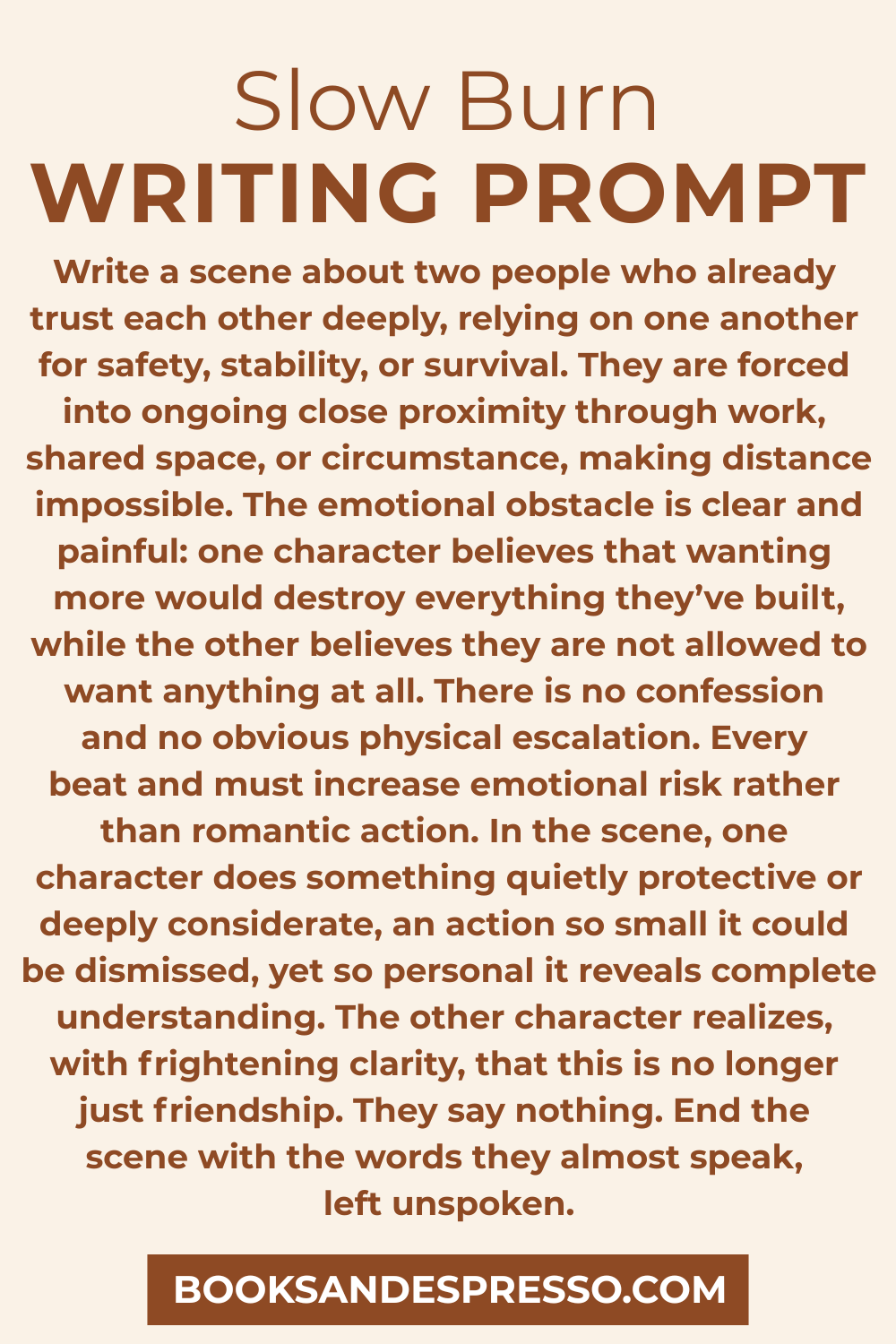
The Core of the Slow Burn Prompt: Wanting Without Permission
At the heart of this slow burn romance prompt is a single idea:
the characters want something they believe they are not allowed to have.
That belief is everything.
Slow burn fails when characters could act but simply don’t.
Slow burn thrives when characters cannot act without emotional consequences.
This prompt removes the option of easy confession and forces the story to live in the space between awareness and restraint.
That space is where longing grows.

What’s The plan….
This is the newsletter where writers and storytellers gather for a little motivation, a dash of craft talk, and behind-the-scenes peeks at the creative life without the fluff.




Get instant access
Unlock 30+ Free Tools to Plan, Write & Finish Your Novel
Your Creative Writing Journey Starts Here!

Why Trust Comes Before Romance
The prompt starts with trust on purpose.
These characters already rely on each other. They share safety, routine, or emotional grounding. That means romance is not just a risk to the heart. It’s a risk to stability.
Readers instinctively understand this danger.
When romance threatens something essential, every glance and every small choice becomes charged. The slow burn becomes inevitable instead of delayed.
Forced Proximity Without Forced Drama
The proximity in this prompt is ongoing, not accidental.
This matters.
One-night forced proximity creates momentary tension.
Repeated proximity creates emotional erosion.
Each shared space becomes a reminder of what they cannot say. Each interaction adds weight instead of repeating the same beat. That’s how slow burn avoids dragging while still taking its time.
The Emotional Obstacle Is Internal, Not Convenient
One character believes wanting more would destroy what they have.
The other believes they are not allowed to want at all.
Neither belief is shallow. Neither is easily resolved.
This creates layered conflict without misunderstandings or artificial delays. The characters are not blocked by circumstance. They are blocked by identity.
That’s the kind of conflict readers stay for.
Why the Action Must Be Small
The prompt doesn’t ask for a grand gesture.
It asks for a quiet act of care.
Small actions are dangerous in slow burn romance because they feel intimate without being romantic on the surface. A jacket offered. A task taken over. A silent check-in.
These moments force emotional recognition without allowing release. Readers feel the shift before the characters are ready to face it.
The Power of the Unspoken Ending
Ending the scene with what is almost said but never spoken is not cruelty. It’s craft.
Unspoken words create anticipation because they tell the reader exactly what’s coming without delivering it yet. The scene closes on emotional awareness rather than action, which is the engine of slow burn romance.
Readers don’t want the confession yet.
They want to know it’s inevitable.

How to Use This Prompt Effectively
Use this prompt as:
- A midpoint emotional pivot
- A moment of internal realization
- A scene that raises stakes before a later payoff
Do not rush the follow-up. Let the awareness sit. Let it complicate every interaction that follows.
Slow burn romance is not about waiting longer.
It’s about making the wait hurt in the best possible way.
This prompt does exactly that.